A kitchen redesign doesn’t have to feel overwhelming, whether you’re planning a full renovation or refreshing a few key elements, understanding the fundamentals of interior design kitchens puts you in control. Your kitchen is likely the heart of your home, where family gathers and meals come to life. In 2026, the best kitchen designs balance functionality with style, ensuring every decision serves both purpose and aesthetic. This guide walks you through seven practical design ideas that’ll help you create a space that actually works for your lifestyle while looking sharp. You don’t need unlimited budget or professional help for every decision: with the right foundation, you can tackle much of this yourself.
Table of Contents
ToggleKey Takeaways
- Interior design kitchens should balance functionality with style by starting with a defined layout based on your home’s architecture and daily lifestyle needs.
- Choose a cohesive color palette using a dominant cabinet color paired with one or two accent colors and neutral backdrops to avoid a chaotic look.
- Cabinets consume 30–40% of your kitchen budget, so prioritize drawer quality, soft-close mechanisms, and smart organization solutions like pull-out shelves and lazy Susans.
- Invest in durable countertops and backsplash materials that match your maintenance level, with quartz offering low-maintenance durability and butcher block providing budget-friendly aesthetics.
- Layer three types of lighting—ambient, task, and accent—with warm white bulbs (2700K) and under-cabinet or pendant lights to eliminate shadows and create ambiance.
- Transform your kitchen by prioritizing foundational changes like measurements, style definition, and ruthless organization before investing in expensive renovations.
Define Your Kitchen Style and Layout
Before buying a single cabinet or paint can, nail down your style and layout. Kitchen styles fall broadly into categories, modern, farmhouse, transitional, minimalist, eclectic, and your choice frames every other decision you’ll make. Think about which style aligns with your home’s architecture and your daily life. A busy family with kids might gravitate toward durable, forgiving finishes: a minimalist might opt for clean lines and hidden storage.
Layout matters just as much as aesthetics. The classic work triangle (connecting sink, stove, and refrigerator) still guides functionality, though modern kitchens often break that rule deliberately. Decide whether you want an open-plan layout that flows into a dining or living area, or a galley-style kitchen that’s tucked away. Measurement is non-negotiable here: document your space (length, width, ceiling height, window and door placements) before moving forward. A bathroom-scale DIYer can sketch this by hand: if you’re serious, use graph paper or free software like Floorplanner to visualize cabinet placement and traffic flow.
Consider browsing design inspiration on Houzz’s kitchen gallery to see hundreds of real-world examples organized by style. This step prevents regret and wasted money. Spend time in your kitchen as it is now, note the pain points and dream features, then let those observations guide your style and layout decisions.
Choose a Cohesive Color Palette
Color sets the mood. A cohesive palette doesn’t mean matching everything: it means choosing a base color, one or two accent colors, and a neutral backdrop that tie together visually.
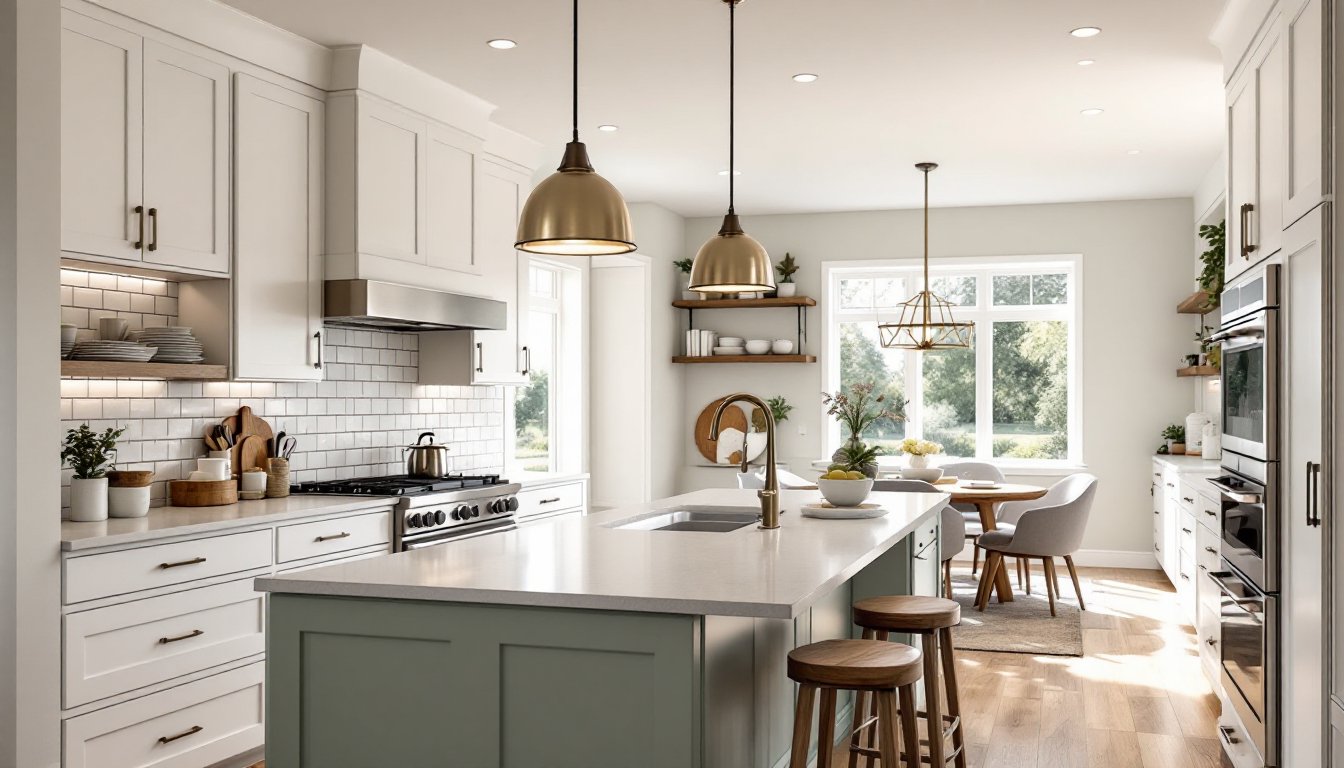
Most kitchens use cabinetry as the dominant color statement, white, cream, soft gray, navy, or warm wood tones dominate 2026 trends. Pair that with a secondary accent (think sage green, deep charcoal, or warm terracotta for a few open shelves or an island) and a neutral countertop or backsplash. The key is restraint: too many colors feel chaotic in a space where you spend time daily.
Test colors in your actual lighting before committing. Grab paint chips and tape them to your walls: observe them at different times of day. Cabinet finishes shift under fluorescent, natural, and warm pendant light differently. If you’re repainting cabinets, use high-quality kitchen and bath primer and paint (trim enamel or cabinet-specific formulas). Semi-gloss or satin finishes resist moisture and dirt better than flat, though they show imperfections more readily.
Don’t overlook the ceiling and trim. A neutral or slightly lighter ceiling makes the space feel taller: trim color can echo cabinetry or create subtle contrast. Consistency across these elements makes even a small kitchen feel intentional. Contemporary kitchens showcase modern color strategies that you can adapt to your space, and exploring modern farmhouse kitchens reveals how neutral palettes can incorporate warmth through texture and material.
Select Functional and Stylish Cabinetry
Cabinets eat 30–40% of a kitchen budget, so this choice demands thought. You have three routes: semi-custom built-ins, stock cabinets, and DIY refinishing of existing cabinets.
Stock cabinets (Home Depot, Lowe’s, local suppliers) come in standard dimensions and finishes. They’re affordable, readily available, and work fine for most kitchens. Quality varies widely: mid-range stock options from reputable makers often outperform cheap alternatives. Semi-custom cabinets let you tweak dimensions, finishes, and hardware within a manufacturer’s system, more flexibility, higher cost, longer lead times.
Cabinet refacing or repainting is smart if your structure is sound but aesthetics are tired. Strip and prime existing boxes, apply cabinet-grade paint or stain, and install new hardware. This costs 30–50% less than replacement and works beautifully if the cabinet layout already suits your workflow.
When selecting, prioritize: drawer quality (soft-close mechanisms, solid wood or plywood, not particle board), shelf spacing that fits your items, and hardware that feels good in your hand. Explore what’s available from makers who specialize in ready-made quality options. Cabinet organization transforms functionality, pull-out shelves, lazy Susans in corner cabinets, drawer dividers, and vertical bakeware racks squeeze utility from every inch. Measure your dishes, glasses, pots, and pantry items before finalizing cabinet configuration.
Invest in Quality Countertops and Backsplash
Countertops and backsplash are workhorses and focal points. They take daily abuse and shape the kitchen’s visual identity.
Countertop materials range by durability, maintenance, and cost. Quartz is non-porous, stain-resistant, and requires no sealing, ideal for busy kitchens. Granite is durable but porous (needs annual sealing): it’s stunning but demands upkeep. Laminate and butcher block offer budget-friendly aesthetics but require gentler care. Concrete gives industrial flair but cracks and stains without proper sealing. Choose based on your lifestyle: high-traffic family kitchen, minimalist maintenance-phobic household, or passionate home baker?
Consider depth and overhang too. Standard countertops are 24 inches deep and 1.5 inches thick: overhangs of 12–15 inches create seating at an island. Edge profiles (bullnose, ogee, waterfall) affect both aesthetics and cost.
Backsplash traditionally protects the wall behind the stove and sink but has become pure design statement. Classic subway tile reads modern or farmhouse depending on grout color and layout (stacked vs. offset). Hexagon tiles, large-format slabs, or even peel-and-stick options give personality without hiring a tile setter. Grout color matters, white grout emphasizes tile shape: darker grout hides stains and reads contemporary.
If DIY-ing a small backsplash, use thinset mortar (not old-school mastic), level your substrate, and apply grout after 24 hours. Watch YouTube tutorials and practice on cardboard first. Large installations or complex patterns warrant a professional. Resources like The Kitchn offer detailed kitchen project guidance.
Optimize Lighting for Ambiance and Functionality
Lighting is where many DIY kitchens falter. You need three types: ambient (overall illumination), task (focused light for cooking and prep), and accent (mood and highlight).
Ambient lighting typically comes from a central ceiling fixture or recessed lights. Recessed lights spaced 4–6 feet apart create even coverage. Install them during construction or renovation if possible, though retrofit kits exist for existing ceilings. Aim for 2700K color temperature (warm white) to complement skin tones and food: 4000K reads clinical.
Task lighting is critical. Pendant lights hung 30–36 inches above an island or counter provide focused, shadow-free light for food prep. Under-cabinet lights (LED strips are affordable and easy to retrofit) illuminate countertops and reduce shadows from overhead fixtures. Mount them 12–18 inches forward of the cabinet face.
Accent lighting is fun, consider backlighting open shelves or glass cabinet doors to highlight dishware, or uplighting inside a range hood surround. Track lighting offers flexibility if you’re unsure of permanent placement.
Wiring and code compliance vary by jurisdiction. Recessed lights require proper insulation clearance (verify with your building code). If you’re running new circuits, hire a licensed electrician, kitchen countertop circuits require GFCI protection per the National Electrical Code (NEC), and mistakes are safety hazards. Pendant or under-cabinet lighting on existing circuits is often DIY-friendly, but confirm with an electrician first. Look at Italian kitchen design inspiration and other design-forward approaches to see how strategic lighting elevates the entire space.
Incorporate Smart Storage Solutions
A beautiful kitchen that doesn’t function is a beautiful failure. Storage genius lies in smart organization, not just more cabinet space.
Vertical storage is underutilized. Open shelving (real or floating brackets) displays dishware and cookbooks while freeing cabinet depth. Install shelves 10–12 inches apart for standard dinner plates: adjust based on your items. Use L-brackets rated for 50+ lbs and secure into studs or use toggle bolts if hitting drywall. Floating shelves require solid backing, never hang on hollow drywall alone.
Drawer dividers and organizers cost $10–50 per drawer but transform chaos into order. Utensil trays, spice racks fitted into drawers, and pull-out wire baskets maximize usable space. Measure your drawers and items before buying: standard dimensions rarely fit perfectly.
Pantry organization extends beyond the kitchen. A tall cabinet with deep shelves, a dedicated pantry closet, or even a shallow wall-mounted spice rack creates breathing room in upper cabinets. Label containers clearly, dried pasta and flour migrate to similar containers, and labels prevent waste and confusion.
Corner solutions are game-changers. Lazy Susans make deep corner cabinets accessible: pull-out corner drawers (called magic corners or carousel systems) maximize dead space. These aren’t expensive ($100–300 installed) and yield dramatic usability gains.
Before finalizing cabinet layouts, inventory what you actually store: everyday dishes, seasonal items, appliances, pantry goods, cleaning supplies. Grouping related items and allocating cabinet zones (baking zone, cooking zone, dishware zone) makes the kitchen feel intuitive. Explore rustic kitchen design ideas and coastal kitchen design approaches for creative storage inspiration beyond standard cabinetry.
Conclusion
Transforming your kitchen into a modern, functional, and beautiful space is achievable when you focus on the fundamentals: defining your style and layout, choosing a cohesive color story, selecting quality cabinetry, investing in durable surfaces, lighting thoughtfully, and organizing ruthlessly. You don’t need to overhaul everything at once, prioritize the changes that’ll impact your daily life most, and build from there. Start with measurements, inspiration, and honest reflection on how you cook and live. The best kitchen design is one that works for you.