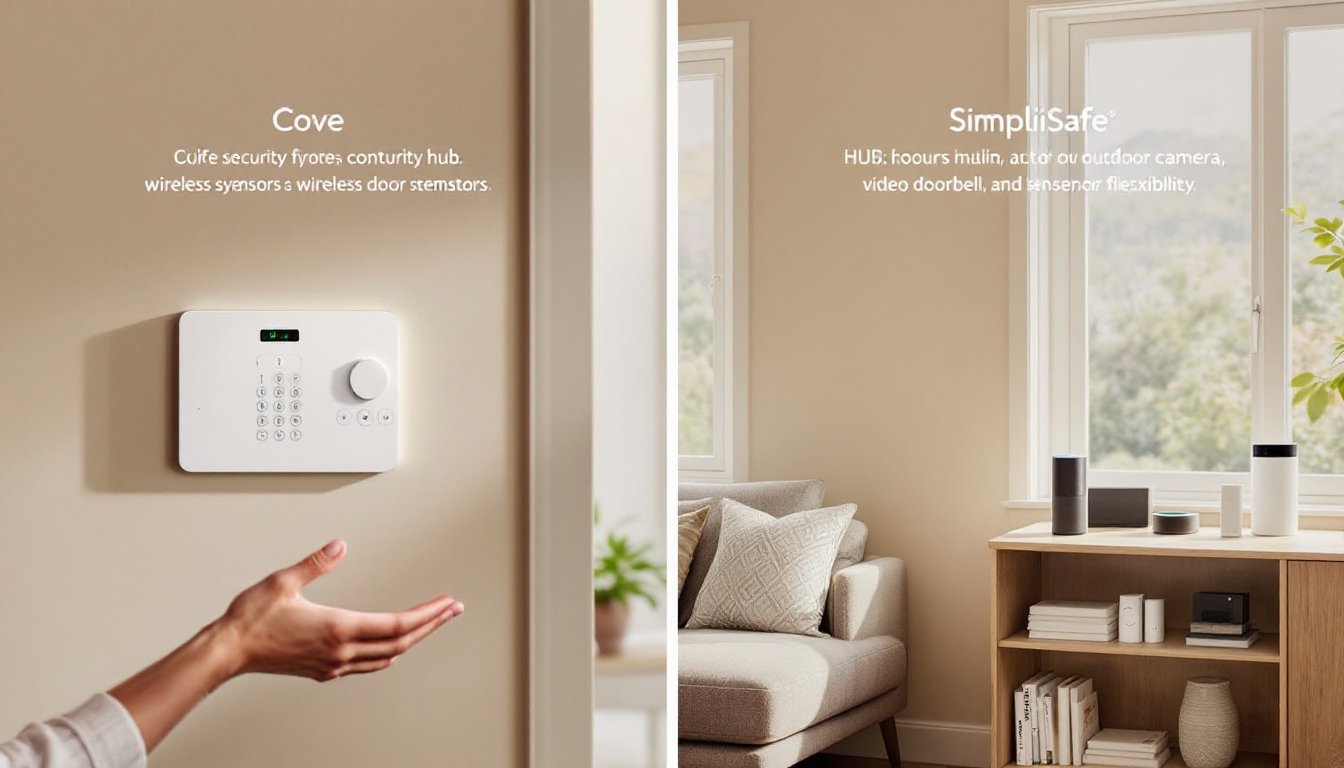
If you’re thinking about securing your home with a DIY system, you’ve probably heard about Cove and SimpliSafe. Both are solid wireless options that don’t require professional installation or long-term contracts, which appeals to homeowners who want flexibility and control. But they’re not identical, they differ in monitoring approach, equipment variety, and how they handle 24/7 protection. This guide walks through the key differences so you can pick the system that fits your home’s layout, budget, and peace-of-mind needs. Whether you’re starting fresh or upgrading your setup, understanding what each platform offers will save you money and headaches down the road.
Table of Contents
ToggleKey Takeaways
- Cove and SimpliSafe both offer wireless DIY security systems without professional installation, but Cove prioritizes built-in 24/7 professional monitoring while SimpliSafe provides flexible self-monitoring and professional options at lower monthly costs.
- SimpliSafe has a significantly lower entry price ($200–$300 for hardware and optional $15–$30/month monitoring) compared to Cove ($250–$400 hardware plus $30–$50/month), saving homeowners $180–$360 annually.
- SimpliSafe offers greater equipment variety including video doorbells, environmental sensors, and smart lock integration, making it ideal for larger homes or those planning to scale their system over time.
- Choose Cove if you want hands-off, always-monitored security with professional dispatch; choose SimpliSafe if you value flexibility, smart home integration, and the ability to upgrade your security setup gradually.
- Both systems use wireless sensors and cellular backup requiring no wiring, though SimpliSafe’s broader smart home compatibility with Alexa and Google Home gives it an advantage for automation and voice control.
Overview: What Sets Cove and SimpliSafe Apart
Cove is a security platform backed by Alarm.com, a company known in the professional monitoring space. It’s newer to the mainstream DIY market and focuses on simplicity: fewer product options, cleaner interfaces, and emphasis on Alarm.com’s 24/7 professional monitoring. SimpliSafe has been around longer and built a larger following. It offers more equipment flexibility, multiple monitoring tiers (including self-monitoring via app), and works with more third-party integrations.
At their core, both systems use wireless door and window sensors, motion detectors, keypads, and cellular or internet-based backup to call for help. Neither requires running wires through walls, a huge advantage if you rent or don’t want to damage drywall. That said, the monitoring model differs. Cove partnerships typically push toward professional 24/7 monitoring as the default. SimpliSafe lets you choose self-monitoring, professional monitoring, or a hybrid. If you value control and flexibility, SimpliSafe’s approach appeals more. If you want a no-fuss, professionally-monitored setup, Cove’s streamlined focus works well. Recent security system comparisons highlight these distinctions clearly.
Installation and Setup Ease
Both systems are DIY-friendly, which is the whole point. You don’t need to hire an electrician or wait weeks for a technician. Out of the box, you’ll mount sensors on doors and windows, place a keypad in a central spot, and run through an app setup to connect everything.
Cove’s approach is slightly more prescriptive. The company guides you through exact sensor placement and provides support if placement questions arise. Setup typically takes 30–60 minutes for an average home. SimpliSafe is similarly straightforward, though it offers more equipment options (additional sensors, outdoor cameras, keypads), so scaling up means more decisions. Both use magnetic door sensors (battery-powered, no wires) and passive infrared motion detectors. You’ll stick sensors on frames, position the base unit near a window or outlet, and sync via the app.
One practical note: DIY security system setup requires honest assessment of your entry points. Count doors and windows, plan motion sensor placement in hallways or main rooms, and decide if you want cameras (SimpliSafe offers more options here). If your home has multiple levels, both companies offer additional keypads or repeaters to ensure signal strength.
Pricing and Monthly Monitoring Costs
This is where details matter. Cove’s pricing typically starts around $30–$50 monthly for professional 24/7 monitoring. Hardware costs are bundled into the service plan, so your upfront cost depends on whether you’re buying additional sensors or cameras. A basic starter kit (hub, keypad, sensors, backup battery) usually runs $250–$400.
Simplisafe’s entry point is lower. Self-monitoring through the app costs nothing monthly: you just buy hardware. A basic kit starts around $200–$300. If you want professional 24/7 monitoring, SimpliSafe’s plans range from $15–$30 monthly, depending on whether you add professional dispatch and extra features. That’s a meaningful difference. Over a year, professional monitoring with SimpliSafe can cost $180–$360, while Cove can run $360–$600.
But, don’t cherry-pick price alone. Cove’s monitoring service is powered by Alarm.com’s trusted infrastructure, it’s the same backbone professionals use. SimpliSafe’s professional monitoring is solid too, but the lower tier ($15/month) includes app-only alerts, not phone dispatch. Read the fine print on what “professional” actually covers. Equipment add-ons (extra sensors, cameras, glass break detectors) cost $20–$150 per item, and both companies push upgrades after initial purchase.
Features and Equipment Comparison
SimpliSafe wins on variety. It offers door/window sensors, motion detectors, keypads, outdoor and indoor cameras, video doorbells, glassbreak sensors, environmental sensors (smoke, CO, water leak), and smart lock integration. Mix and match to build exactly what you need. Cove’s equipment lineup is narrower: core sensors, keypad, hub, and limited camera options. If you want a video doorbell or water sensors, SimpliSafe is your answer.
Both integrate with common smart home platforms. SimpliSafe works with Alexa and Google Home, letting you arm/disarm via voice (with authentication). Cove relies more heavily on Alarm.com’s ecosystem. For automation, like triggering lights when motion is detected or unlocking a smart lock, SimpliSafe has more out-of-the-box compatibility.
Mobile alerts differ slightly. SimpliSafe app notifications are instant: Cove’s professional monitoring means alerts go to the monitoring center first, then to you. That’s slower for awareness but standard practice for professional services. Battery life on sensors is similar: typically 3–5 years for door/window sensors, longer for hubs. Both use cellular or internet backup, so if your Wi-Fi drops, the system keeps working.
Monitoring and Customer Support
Cove’s 24/7 professional monitoring is handled by Alarm.com’s vetted centers. Response times are typically fast, dispatchers will call you if motion or door sensors trigger, verify the emergency, and contact police. This is the “set it and forget it” option. You pay more, but a trained professional is always watching.
Simplisafe’s self-monitoring means you get instant app alerts and handle the response yourself. It’s cheaper but puts responsibility on you, if you’re sleeping, away, or can’t respond, nobody’s automatically calling for help. Professional monitoring with SimpliSafe costs less than Cove but may not include live phone dispatch at the lowest tiers.
Customer support is available from both companies via phone, chat, and email. Cove tends to have tighter integration with its monitoring service, so questions get routed to folks familiar with the dispatch side. SimpliSafe’s support is broader but sometimes feels less specialized. Both offer online setup guides and video tutorials. If you’re tech-savvy, SimpliSafe’s self-service approach is empowering. If you prefer guided hand-holding, Cove’s monitoring partnership provides peace of mind.
Which System Works Best for Your Home
Choose Cove if you want professional monitoring as the default, have a straightforward home layout (no complex smart home integrations), and prefer not to manage alerts yourself. It’s ideal for busy professionals or households where someone isn’t always home. Cove works well for apartments, condos, and modest single-family homes where sensor count is predictable.
Choose SimpliSafe if you value flexibility, want to start with self-monitoring and add professional backup later, or already use Alexa/Google Home extensively. It’s better for larger homes where you might need lots of sensors, outdoor cameras, or multiple keypads. If budget is tight upfront but you want a scalable system, SimpliSafe’s lower entry price and modular approach shine.
Consider your internet reliability. Both prefer Wi-Fi plus cellular backup, but if your connection is spotty, confirm the system handles frequent dropouts gracefully. Test the app responsiveness, Cove and SimpliSafe both offer free trials. Also think about whether you’ll ever want to add cameras, smart locks, or environmental sensors. If yes, SimpliSafe’s broader ecosystem is valuable. Current smart home technology reviews underscore how monitoring flexibility and equipment compatibility increasingly influence system choice.
Conclusion
Cove and SimpliSafe both deliver DIY security without professional installation or long contracts. Cove leans toward simplicity and professional monitoring: SimpliSafe prioritizes choice and cost flexibility. Neither requires a contractor or building permit, you’re simply mounting sensors and configuring an app. Your decision hinges on whether you want 24/7 dispatch built in (Cove) or prefer managing your own monitoring and scaling gear over time (SimpliSafe). Take advantage of free trials, ask both companies about your specific home layout, and choose based on your monitoring preference and long-term gear plans.