The short answer: no, most wooden cutting boards don’t belong in the dishwasher, and putting yours in there is likely to damage it. Many homeowners assume that because modern dishwashers handle dishes and cookware, they can handle cutting boards the same way. The reality is that wood reacts to prolonged moisture, intense heat, and aggressive water jets in ways that plastic or glass won’t. Before you load your board into that next cycle, understand what’s really happening inside your dishwasher and why hand washing is the smarter move. A few extra minutes at the sink will add years to your cutting board’s life.
Table of Contents
ToggleKey Takeaways
- Never put a wooden cutting board in the dishwasher, as the combination of excessive moisture, high heat, and mechanical action warps, splits, and degrades the wood over time.
- Dishwasher exposure causes uneven fiber expansion that leads to warping, cupping, and internal cracking that are nearly impossible to reverse.
- Hand washing your cutting board takes just two minutes and uses warm water with dish soap—a simple process that extends your board’s lifespan from months to decades.
- Maintain your wooden cutting board by drying it immediately after washing, oiling it monthly with food-safe mineral oil, and storing it flat or upright in a cool, dry location.
- For sanitizing after raw meat prep, use hot soapy water followed by a bleach solution instead of the dishwasher, or maintain separate boards for different food types.
The Short Answer: Why Most Wooden Cutting Boards Don’t Belong In The Dishwasher
Wooden cutting boards are made from organic material that’s fundamentally different from the ceramics, metals, and plastics your dishwasher was designed to clean. Water, heat, and mechanical action that work fine on stoneware will warp, split, or degrade wood over time. Can a wooden cutting board go in the dishwasher? Technically, yes, it won’t dissolve or catch fire. But should it? No, not if you want to keep it functional and looking decent.
The damage isn’t always immediate. You might put a board in the dishwasher five or ten times without obvious problems. Then one day you notice it’s slightly warped, or you feel the surface texture has changed. By then, the harm is already done. Manufacturers almost universally recommend against dishwasher use, and that’s based on real experience with how wood responds to the machine’s harsh environment.
Hand washing takes maybe two minutes for a typical cutting board. The payoff, a board that lasts years instead of months, is absolutely worth it.
How Dishwashers Damage Wood
Two main factors destroy wooden cutting boards in dishwashers: excessive moisture and high temperature. Together, they trigger physical and chemical changes in the wood that are nearly impossible to reverse.
Moisture And Warping
Dishwashers expose wood to sustained, direct water contact at levels far beyond what the board encounters in normal kitchen use. When wood soaks up that much moisture, the fibers expand unevenly. Grain patterns, density variations, and the way the board was cut all affect how much it swells in different directions.
The result is warping, the board curves, twists, or develops a crown (bulging up in the middle). A warped cutting board won’t sit flat on the counter, and it’s dangerous to use because it rocks under the pressure of chopping. The edges may also cup (curl up at the sides), which makes it harder to control your knife. Once a board warps, you can’t reliably flatten it again, especially if it’s warped unevenly.
Wood also absorbs odors and flavors from the dishwasher environment. That moisture is often mixed with detergent residue and food particles from other dishes, which can leave your cutting board smelling off or tasting strange, not something you want when you’re prepping food.
Heat And Wood Deterioration
Most dishwashers run at water temperatures between 130°F and 160°F. Some heated-dry cycles push even higher. These temperatures accelerate the breakdown of lignin, a substance that binds wood fibers together. Over multiple cycles, the wood becomes more brittle and prone to cracking.
Heat also drives moisture deeper into the wood, which makes the warping problem worse. The surface dries faster than the interior, creating internal stress that splits the grain. You’ll see tiny cracks appear first near knots or along the grain, then gradually spread.
Best Practices For Cleaning Wooden Cutting Boards
Hand washing is straightforward, and the process takes about as long as loading a dishwasher. Here’s what works best:
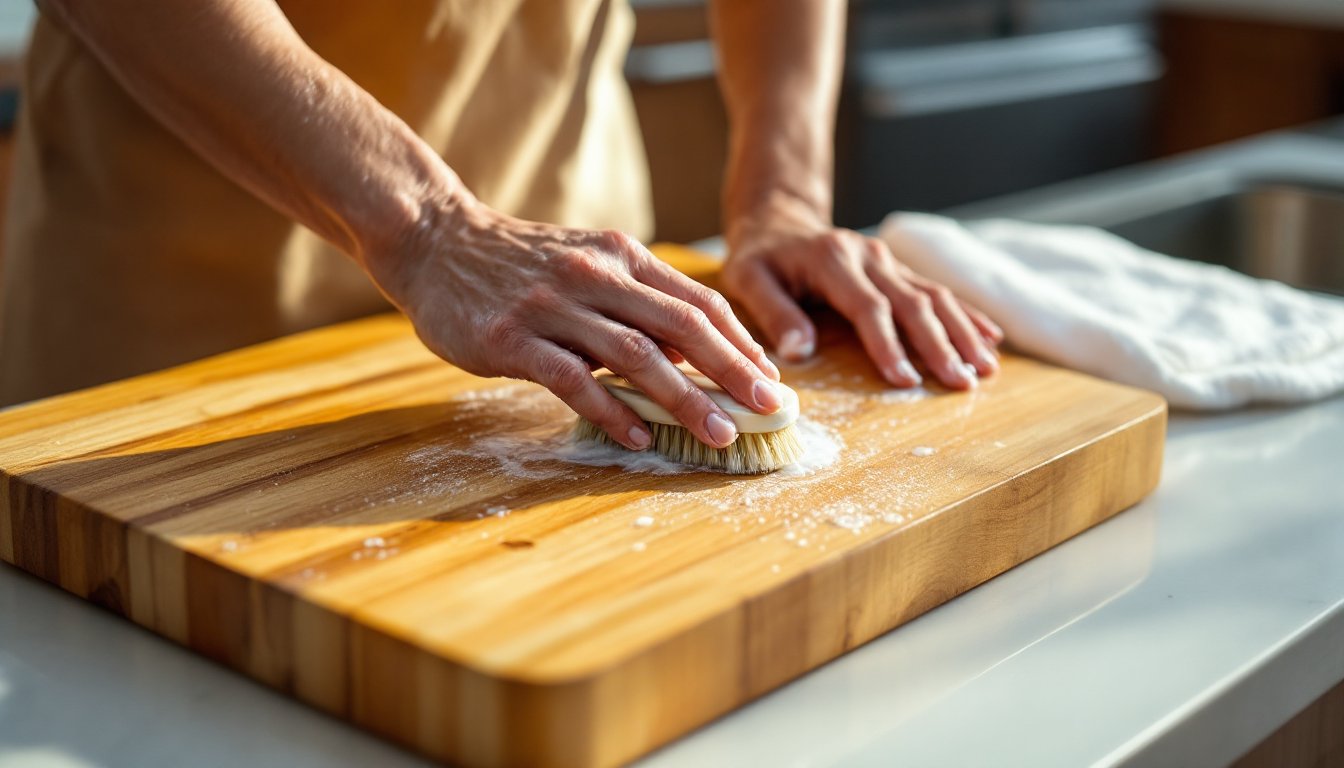
Wash immediately after use. Don’t let food residue dry on the board. Fresh food is easier to remove, and you’ll avoid setting stains. Use warm (not hot) water and a little dish soap, nothing fancy required.
Use a soft brush or sponge. Scrub gently in the direction of the grain to avoid raising splinters or creating micro-damage. If you’re removing stubborn residue, a plastic scraper works better than steel wool or abrasive scouring pads, which can scratch and thin the surface.
Dry it immediately. After washing, stand the board upright or lay it flat on a clean cloth. Don’t leave it sitting in water or propped in a drying rack where water pools on one side. Moisture sitting on the wood for hours replicates the damage a dishwasher causes, just slower. A good drying cloth removes excess water quickly.
Deep clean monthly. For routine sanitizing beyond soap and water, white vinegar works well. Spray it on, let it sit for a few minutes, then wipe and dry. Vinegar doesn’t over-saturate the wood the way prolonged soaking would. You can also sprinkle coarse salt on the board, then rub it with a cut lemon, the salt acts as a gentle abrasive, and the lemon’s acid has mild antibacterial properties.
Oil the board regularly. A food-safe mineral oil or beeswax-mineral oil blend nourishes the wood and creates a moisture barrier. Apply it every month or two (more often if the board looks dry). Rub it in, let it soak for a few minutes, then wipe off excess. This keeps the wood from drying out and cracking, and it refreshes the appearance.
When You Can Use A Dishwasher: Exceptions And Alternatives
Most wooden boards should stay out of the dishwasher, but there are a few exceptions. Some manufacturers treat boards with special finishes or use certain wood species that tolerate dishwasher use better than others. Check your board’s label or the manufacturer’s website before assuming it can’t go in.
Bamboo cutting boards, for example, are sometimes marketed as dishwasher-safe. Bamboo is technically a grass, not wood, and it’s denser and more water-resistant than many hardwoods. Even so, the heat and moisture can still warp bamboo over time, so hand washing is still the safer option.
If you’re concerned about sanitizing your board, say, after raw meat prep, you don’t need a dishwasher. Hot soapy water followed by a rinse with a bleach solution (one tablespoon of bleach per gallon of water) kills bacteria effectively. Let the solution sit for a minute, then rinse thoroughly and dry. This approach also works better for wood than a dishwasher would, since you control the temperature and duration.
For a hands-off cleaning routine, consider having two boards: a wooden one for bread, produce, and cooked foods, and a plastic or bamboo one for raw meat and seafood. That way, you can toss the plastic board in the dishwasher without worry, and your wooden board stays pristine. This strategy is recommended by food safety experts for preventing cross-contamination anyway.
Maintaining Your Wooden Cutting Board For Long-Term Use
With proper care, a quality wooden cutting board can last decades. The key is treating it as the functional tool it is, not a decorative prop.
Store it flat or upright, never tilted. A board tilted at an angle allows water or air to dry unevenly from one edge, which promotes warping. Lay it flat in a cabinet or stand it upright (with good airflow) so moisture evaporates evenly.
Keep it away from direct heat sources. Don’t store your cutting board above a stove, radiator, or in direct sunlight. Uneven heat dries the wood too fast and causes cracking. A cabinet, drawer, or wall-mounted rack in a cool, dry spot is ideal.
Inspect for mold or mildew regularly. If your board develops dark spots or a musty smell, it’s been sitting in moisture too long. Clean it with a vinegar spray, dry it thoroughly, and improve air circulation in the storage area. Kitchen organization solutions that allow better airflow help prevent this.
Sand the surface if it becomes rough. After years of use, a board may develop splinters or slight surface damage. Light sanding with 120-grit or 150-grit sandpaper (sanding with the grain) smooths it out. After sanding, oil the board to reseal it.
Replace it only when necessary. A well-maintained wooden board is a workhorse. Deep stains, significant cracks that split the grain, or warping so severe the board rocks are signs it’s time to retire it. But many boards stay useful far longer than homeowners expect.
Investment in quality matters too. A solid hardwood board (maple, walnut, or acacia) outlasts cheaper particle-board composites by years. While solid boards cost more upfront, the durability justifies the expense. Kitchen design inspiration and product reviews can help you explore board options that fit your kitchen aesthetic while performing well.